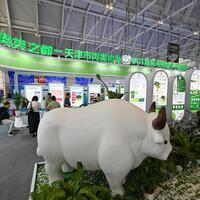


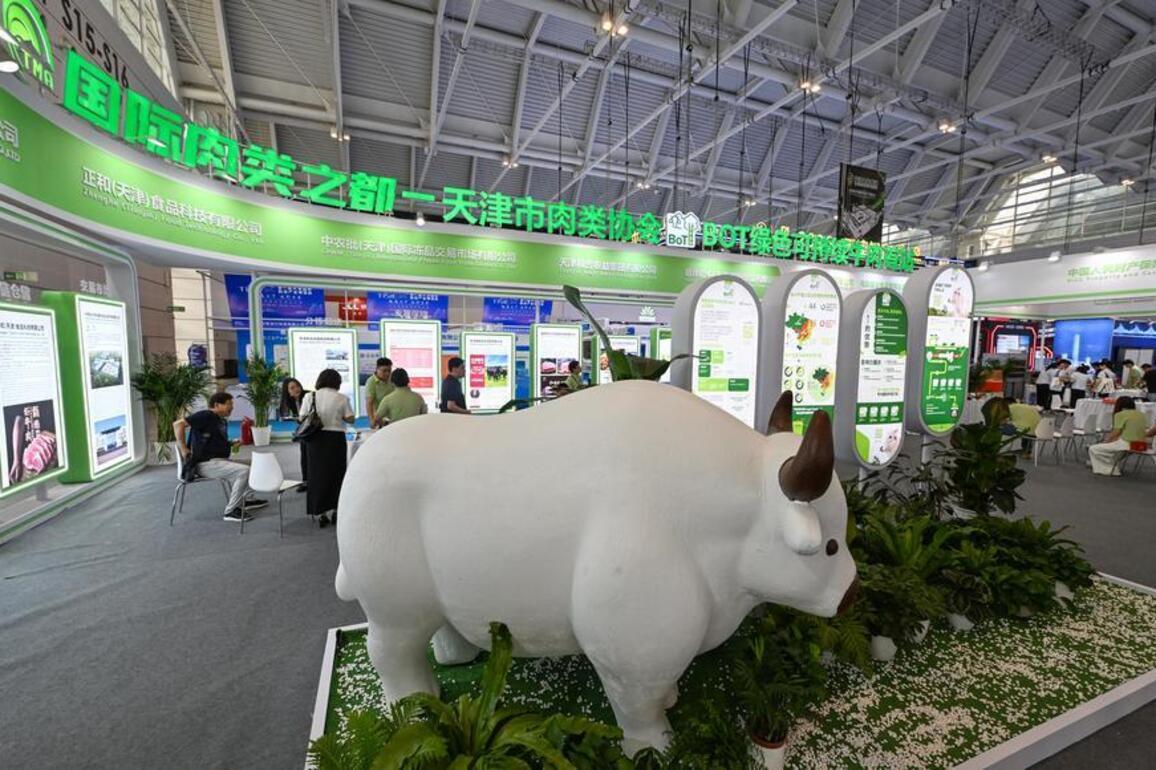
BEIJING, June 4 (Xinhua) -- A major Chinese meat importer has agreed to buy 50,000 tonnes of certified deforestation-free Brazilian beef by the end of 2027, reflecting a quiet shift reshaping production in Brazil and helping to protect its rainforest.
As the world's largest buyer of Brazilian beef and soy, China is increasingly voting with its wallet for forest-friendly food. Tianjin Meat Association in north China signed the agreement Wednesday.
Despite carrying an estimated price premium of five percent to 10 percent over conventional beef, Xing Yanling, president of the association, is confident the products will find a market.
"The products are expected to flow into premium supermarkets, high-end restaurants and live-streaming platforms, where their full traceability and deforestation-free credentials serve as the main draw," said Xing.
"Chinese consumers are looking beyond just price now, and things like traceability and consistent quality are weighing in more and more," said Zhang Xinhao, CEO of a Chinese beef import company.
Xing led a visit to Brazil in April, where association members participated in an inspection tour. Since returning, she has often described to friends the unforgettable experience of being enveloped by tens of thousands of shades of green. "We hope to bring more consumers on board with deforestation-free products, so the demand side can give sustainable production a real push," she said.
The appetite for sustainably-sourced products is not limited to beef. In 2025, COFCO International, Modern Farming and China Shengmu Organic Milk signed an agreement to supply 1.5 million tonnes of sustainable Brazilian soybeans to China between 2025 and 2030, with independent third-party auditing to ensure the absence of deforestation.
"China's procurement of deforestation-free products demonstrates the sense of responsibility of a major nation and has been widely recognized by the international community," said Zhu Chunquan, senior advisor at the World Economic Forum's Tropical Forest Alliance. Zhu said the shift reflects years of China's national policy guidance toward green and low-carbon development.
According to China's 15th Five-Year Plan (2026-2030), the country will accelerate the development of green production and consumption patterns, strengthen policy incentives, promote a low-carbon economic transformation, improve mechanisms to encourage green consumption, and expand the scale of government procurement of green products.
"As a major global importer, China's refusal to purchase products linked to deforestation can steer producers toward more sustainable practices, contributing to the protection of tropical forests and the mitigation of climate change," Zhu said.
China's green consumption trend also delivers a concrete market signal to a key trade partner like Brazil, as well as showing national commitment to encouraging structural changes for environmental outcomes.
Laudemir Mller, president of the Brazilian Trade and Investment Promotion Agency, said that growing environmental awareness among Chinese consumers highlights the strategic complementarity between the two countries.
"China is Brazil's largest buyer of soybeans and beef," he said. Chinese demand for sustainable agricultural products encourages Brazilian producers to continue adopting green practices throughout the production process, enhancing value added and international competitiveness, while also contributing to forest protection, he added.
Bai Yunwen, vice president of Institute of Finance and Sustainability, suggested that the two countries expand mutual recognition of sustainability standards, as well as cooperation in agricultural technology and green finance.
"As important members of the Global South, the bilateral cooperation between China and Brazil in green agriculture is of great significance for global food security and climate stability, serving as a reference for the transition of global agriculture toward a green and sustainable future," Bai said.